

Assess customer service by looking for multiple, accessible communication channels, the availability of dedicated account management, and the carrier's willingness to provide flexibility in service levels after a shipment has been initiated. A carrier's industry reputation and references from similar businesses are also strong indicators of their commitment to customer service.
How to Choose a Reliable LTL Carrier Near You
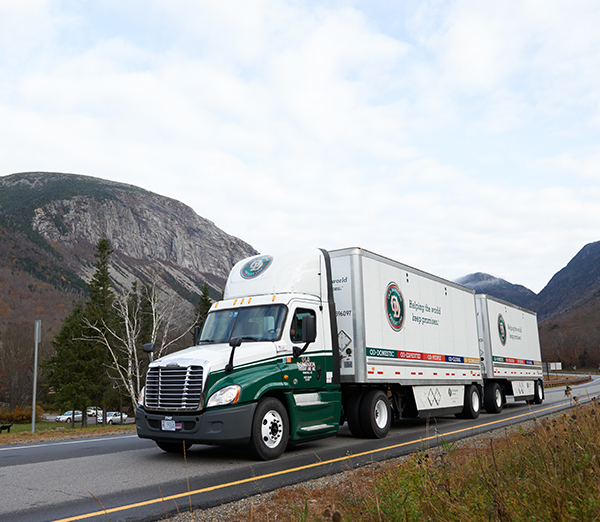
Evaluating LTL carriers means assessing coverage, performance, technology, customer service, and financial stability. Using a structured approach helps shippers make a confident decision.
Selecting a reliable less-than-truckload (LTL) carrier is an important decision that serves as the backbone of your supply chain. Because carriers vary widely in their geographic reach, on-time performance, claims ratios, technology integration, and customer service culture, choosing the right partner and learning about LTL pricing are the most effective ways to reduce the risk of delays, damage, and capacity challenges.
This guide is designed to move your selection process beyond basic price comparisons. It provides a structured decision framework for shippers seeking regional or national service who want to partner with a carrier that offers long-term reliability and capacity. We will outline the core criteria for evaluating carriers, demonstrate how to utilize digital tools like OD's service center locator and provide the guidance necessary to use these factors to make an informed choice.
In This Guide:
- Evaluation Criteria for LTL Carriers
- Shipper Financial Stability & Safety Record
- Putting It All Together: Selecting the Right LTL Carrier
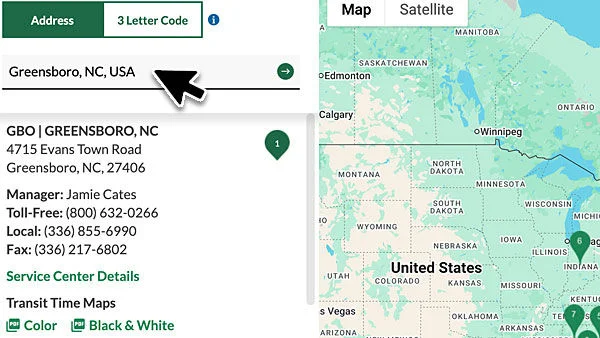
- Using OD’s Service Center Locator to Evaluate Coverage
- Frequently Asked Questions
After reviewing this guide, you will be equipped to evaluate carriers to ensure your decision supports both your current shipping needs and company's growth.
Evaluation Criteria for LTL Carriers
When comparing LTL freight shipping providers, the primary evaluation criteria should be service coverage, on-time performance and claims ratios, technology capabilities, customer service, and financial stability. These factors are the essential benchmarks for assessing whether a carrier can reliably move your freight within your required service areas, meet transit-time expectations, protect shipments from damage, and support your long-term shipping needs.
It is important to understand that while all these criteria matter, different shippers will weigh them differently based on their specific industry requirements, shipment volumes, and the complexity of their supply chain. For instance, a shipper moving high-value medical equipment will likely prioritize safety and handling procedures, while a shipper serving major retail chains will prioritize on-time performance and technological integration.
A unique aspect of this evaluation is the inclusion of local representatives. For example, at OD, our service centers feature local operations teams who become familiar with your freight handling requirements, as well as Solutions Specialists who build strong, day-to-day partnerships with customers in their territory. This model holds true regardless of whether you are a small local business or a national account. National accounts benefit from a tiered service approach: a National Account Representative handles high-level strategy, while local Solutions Specialists and operations teams provide on-the-ground support to ensure each facility’s individual needs are met.
Service Coverage & Network Reach

Service Coverage & Network Reach
Service coverage and network reach are the foundational evaluation criteria for any LTL carrier selection, as they define the geographic areas a carrier serves through its own terminals and operational network. Reliable LTL service depends heavily on a carrier’s ability to service a shipment from pickup to delivery within its own network of equipment and facilities.
Service Area and terminal network: You should confirm that the carrier directly serves both your origin and destination locations. Direct service is ideal because it keeps your freight within a single carrier's controlled network, reducing handling and opportunity for lost or misrouted freight.
Direct-service vs. partner-dependent networks: Carriers that maintain end-to-end control over their network provide greater consistency and reliability. When your freight is handled by a single organization from pickup to final delivery, communication remains streamlined and accountability is centralized. Conversely, it is critical to ask about a carrier’s use of interlining—the practice of transferring freight between different carriers to complete a shipment. While sometimes necessary, interlining frequently increases handling, adds administrative fees, extends transit times, and introduces a significantly higher risk of misrouted freight.
Proximity to your facilities: Geographic proximity matters. Carriers with terminals located near your facilities can support faster transit times and provide much more flexible pickup windows, which is essential for businesses with fluctuating shipping schedules. With a vast network of more than 260 service centers, OD positions capacity close to your operations to ensure reliable, local responsiveness. You can easily map out your nearest terminal and assess regional proximity by using our service center locator tool.
Performance & Claims Ratio
Performance & Claims Ratio
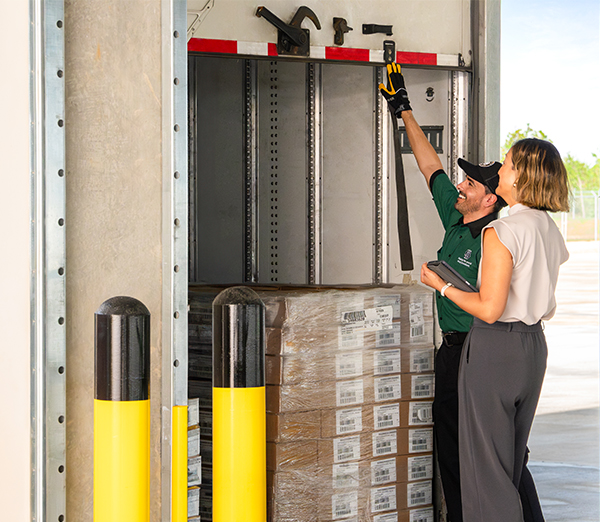
Performance metrics and claims ratios are the measurable indicators of how reliably an LTL carrier meets its shipping schedules and protects your freight from damage. These are the objective performance metrics for a carrier’s daily operations.
On-time pickup performance: Consistency in meeting scheduled pickup times is the first link in the chain. A carrier that is consistently on-time for pickups creates a positive ripple effect throughout your supply chain.
On-time delivery performance: This is the reliability in meeting quoted transit times. Your customer's satisfaction is directly tied to the carrier's ability to deliver shipments when expected.
Claims ratio: This is the percentage of shipments reported damaged or lost. A lower ratio is the ultimate indicator of better freight handling. You should always investigate a carrier’s claims ratio, handling procedures, and investment in claims-prevention tools.
Independent benchmarks and surveys: Use reputable third-party evaluations, such as those from Mastio & Company*, to compare carriers. These surveys measure carriers on objective metrics like timeliness, responsiveness, courteousness, professionalism, and overall value.
Service guarantees and expedited options: Assess whether the carrier offers time-critical services for your most high-priority freight.
Claims management process: Beyond preventing damage, evaluate the carrier’s process for handling claims. A superior carrier provides quick, transparent, and fair resolutions.
Retail performance and compliance: Shippers who move freight to large retailers often face strict vendor scorecards. For example, OD is a preferred carrier for major retailers like Walmart, Amazon, and CVS because we specialize in helping shippers improve their overall shipping performance. By managing the complex clerical processes involved in shipping to large Distribution Centers (DCs), we help our customers reduce fines, avoid chargebacks, and ultimately improve their relationships with their retail partners.
Technology & Tracking Capabilities
Technology & Tracking Capabilities
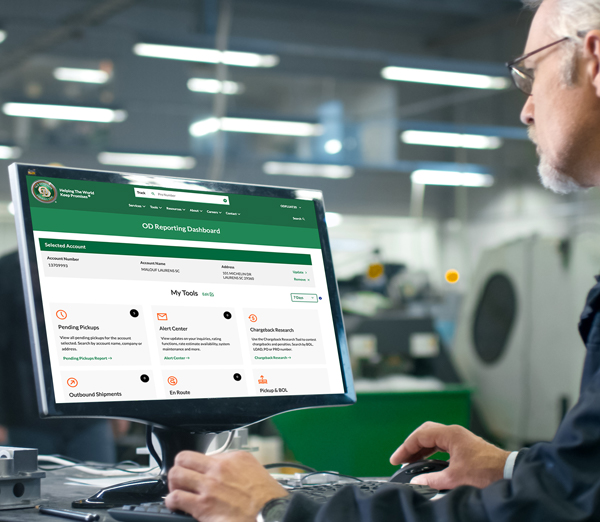
In the modern LTL landscape, a carrier’s investment in technology is a key component for evaluation when considering your shipping provider. Technology directly impacts the ease and visibility a carrier can provide when transporting your LTL freight.
Online shipping portals: Your primary interface should be a robust digital tool that allows for seamless booking, document management, and invoice viewing.
Real-time tracking and visibility: Modernized carriers should provide real-time status updates, accurate ETAs, and proactive exception alerts that notify you before a delay becomes an issue.
Electronic proof of delivery: Digital confirmation of shipment completion is essential for your internal accounting and customer service needs.
System integration options: For high-volume shippers, the ability to connect via APIs, EDIs, or TMSs (Transportation Management System) is vital. This integration removes manual entry errors and speeds up the entire shipping process.
Analytics and reporting: Choose a carrier that provides access to your own performance data, which allows you to extract actionable insights and optimize your future shipping patterns.
Customer Service & Responsiveness

Customer Service & Responsiveness
Customer service and responsiveness are critical evaluation criteria because they define the human element of your LTL partnership. When shipments face unexpected disruptions, the quality and speed of your carrier's communication determines whether that disruption becomes a managed issue or a major supply chain failure.
Communication channels: Ensure the carrier provides multiple, accessible channels, including phone, email, and intuitive self-service tools. A top-tier carrier balances technology with human touch points, offering access to live chat with real people rather than only offering a chatbot. At OD, local, human customer service is always part of your experience whenever you need a quick resolution.
Responsiveness: This is measured by the speed and professionalism with which a carrier addresses your questions or concerns.
Account management: Look for the availability of dedicated representatives who know your account history, preferences, and pain points. At OD, our regional strategy places Solutions Specialists and account managers directly in your territory. They understand the local infrastructure, traffic patterns, and unique market challenges affecting your business.
Flexibility: Your carrier should be able to adapt to sudden changes in volume or unique handling requirements. A top-tier carrier also has the ability to upgrade service levels even after a shipment has already been picked up.
Reputation and references: Industry recognition and long-term customer feedback are excellent indicators of how well a carrier handles the challenges of day-to-day shipping operations. For example, OD has been selected the #1 National LTL Carrier for Quality by Mastio and Company* for 17 years in a row.
Financial Stability, Safety & Network Capacity
A carrier’s financial stability and safety are often overlooked, but they are absolutely essential to your long-term success. These factors determine a carrier’s capacity to invest in the infrastructure that keeps your freight moving.
Network capacity & infrastructure investment: This is a core differentiator. Capacity flex is a critical evaluation tool. As such, you need a carrier that has the capacity to service your lanes during times of high volume and growth. At OD, we keep excess capacity in our network to service customer needs. We invest heavily in purchasing trucks, trailers, and building new service centers before they are needed. This proactive approach allows us to scale with your business.
Safety performance: Safety is a signal of operational discipline. High regulatory compliance and strong safety scores indicate that the carrier treats your freight with the same care they treat their equipment and employees.
Using OD’s Service Center Locator to Evaluate Coverage
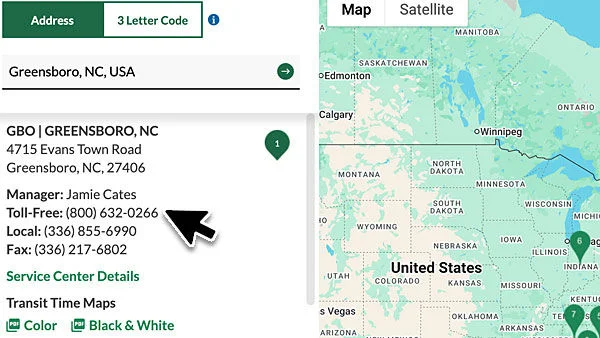
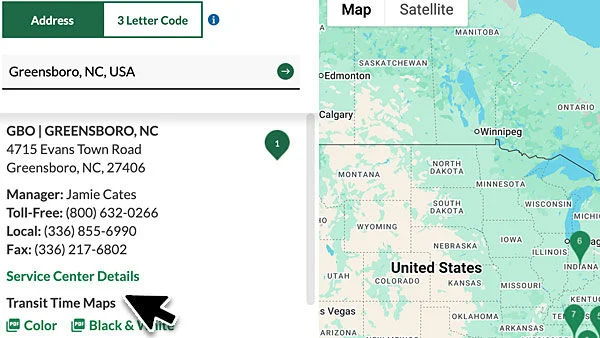
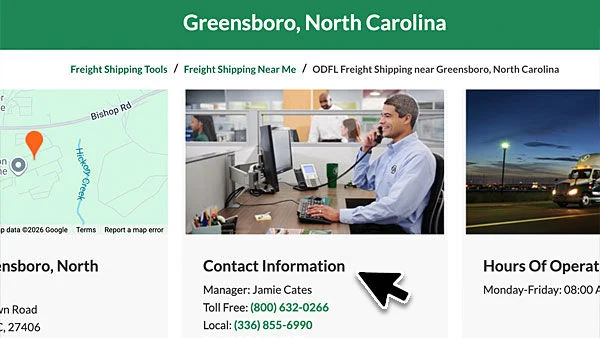
The OD service center locator is a practical, powerful tool for your carrier evaluation process. It helps shippers identify nearby terminals, confirm direct-service lanes, and review transit expectations, all of which are essential to assessing whether a carrier fits your operational footprint. Incorporating this tool into your routine ensures that you are making decisions based on actual lane capabilities rather than service maps alone.
To use the locator effectively in your evaluation:
Frequently Asked Questions
The most important criteria include service coverage, on-time performance, claims ratios, technology integration, and financial stability. These factors work together to dictate the reliability and total cost of your shipping operations.
Service coverage matters because it defines the geographic consistency of your supply chain. Carriers with extensive direct-service, like OD, avoid the need for interlining, which significantly lowers the risk of freight damage, delays, and administrative complications.
*The Mastio Award is Property of Mastio & Company.